See Ya, Substack.

Remember how I made a post a while back saying I was going to keep this blog site but would also be moving to Substack? But also they’d previously platformed Nazis (as well as COVID deniers and QAnon types) so maybe I wouldn’t be there that long? That’d be keeping an eye on it to see if they refused to clamp down on those kinds of blogs and making a decision about whether I’d stay accordingly?

Yeah, they started promoting Nazis.

This is just a little something to say that I’m no longer there, and if you are, it’s not a great idea to stick around.

Being aware that companies and people we support are doing bad things takes work, and thus takes energy. In the case of Substack, I didn’t do that work as diligently as I should have, and I was made a fool as a result.

I know there are a lot of folks who have blogs on there that are brilliant that you probably enjoy, and I know I have a lot of friends who are also writing incredible work on there too. I also know that if you read anything I write, you’re probably not real keen on supporting a company that is making money off platforming and now promoting Nazi blogs.

If you have a Substack account, consider joining me in deleting it. You can still read the free blogs without an account, and if a writer is savvy, they’ll also have a tip jar available for you to drop cash into if you’re so inclined.

Contact your favourite writers and tell them the low down on how Substack has dropped the mask on how rotten it is. Suggest they join a different platform – my favourite former Substacker David Farrier’s Webworm uses Ghost now, and as far as I know, WordPress hasn’t been too gross in their own dealings. (Though if they have, I’d very much like to know.) If you’re a writer yourself, take a look at your other options – there’s plenty around – and consider starting up a newsletter through other means so folks can still follow your work without using socials. If you have a blog on an unpaid platform, set up a tip jar so that folks can contribute without subscribing.

There are some reports that Disney has lost over a billion dollars this week for cancelling Jimmy Kimmel over the tamest of jokes at the expense of Trump. (Some other sources dispute the number and the cause, but the boycott is definitely underway.) If you feel like that it’s justified to boycott an international conglomerate of that size with such a stranglehold over our cultural lives over one show, then I’d expect you’d feel that it’s reasonable to cancel an account with a website that hosts multiple Nazi blogs, and has previously refused to de-platform them under the excuse of “free speech”.

But that excuse? It’s bullshit.

-Mike Masnick, founder of Techdirt

Substack isn’t just letting Nazis come and speak in their living room. They’re giving them a cup of tea and a megaphone.

I don’t make much money. I have bugger all reach. But I can still say something.

Today, that something is: Fuck Substack. Fuck Nazis. And fuck anyone who thinks they have a right to be heard.

Nicotina

I smelled her before I saw her,
Tobacco remnants heavy in the air.
A waft of the taste of Dickensian smog,
So dense it was almost sticky.

I’d never seen anyone with a mouth like the proverbial puckered arsehole before
But there she was,
Smelling of nicotine and bonfires,
Grey eyes circled in wonky blue liner.

I couldn’t help wondering
How does someone fit a cigarette
Between lips as tight and tense as those?
It must be a hell of a squeeze.

***

I remembered writing this poem and desperately wanted to publish it but couldn’t find it in any of my diaries or notebooks. I turned my room upside down to find it. I hope it was worth it. x

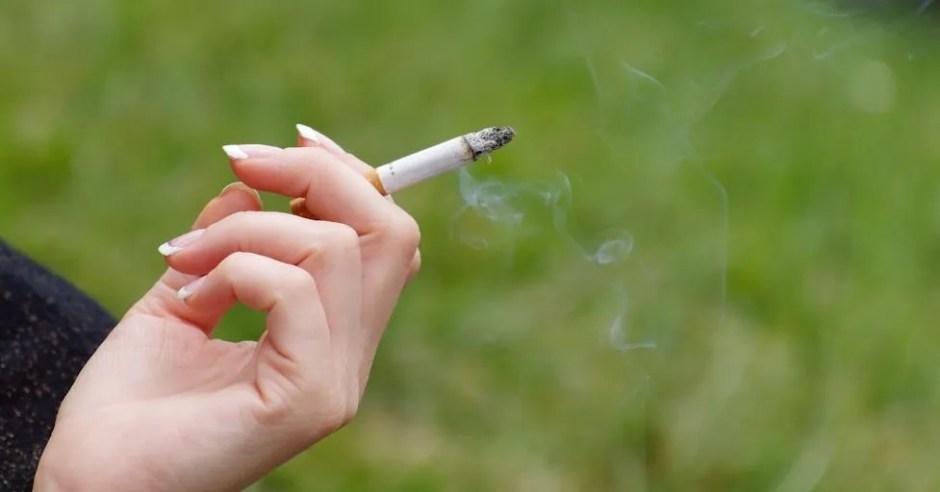
Photo by Koa’link on Unsplash

3:59:59 17/6/24

It’s a small thing
To see one hour tick over into another
The 59:59 turning to noughts
Another second in the arbitrary measuring of time.

Stop and think
About all those hours in your life
That ticked over without being observed,
Thought about,
Recognised.

Suddenly that one little second
Feels so incredibly miniscule
Yet so immensely momentous.
What an honour to have been one of only so many
To take note of that exact moment passing by.

*****

Poem by me. Photo by Laura Chouette on Unsplash

Two posts in a month! Crazy.

– N

A True Imposter

I lost my job on Monday.

It was a long shot, really. I’d never had a communications role, and here I was coming in at a level that I didn’t think I was ready for, and as it turned out, I wasn’t.

I can’t remember the last time I had a job so incredibly full of contradiction: I loved working there while also having the worst case of imposter syndrome I’ve ever had. As it turns out, it wasn’t imposter syndrome but just an accurate personal assessment that I was completely out of my depth.

It hurts to think I blew it after only three months – I simply wasn’t good enough to pass my probation – but I’m okay.

This is the sort of thing we’re told not to talk about in the public sphere, which makes me even sadder. We spend so much time on days and campaigns dedicated to mental health, but so often we don’t let people talk about events that can cause poor mental health in the way that will best help them heal, and sometimes, yes, that is in a place where everyone can see.

The biggest thing about this has been how much of a difference there is between my most recent employment experience and the one that came before at 2WEB in Bourke. There I was doing really well work-wise, but health-wise I was quickly going downhill fast. When I left, my boss was emphatic that if I was ever in a position where I needed a job again, I should call him first as he would have me back in a heartbeat. Despite all that, I was burned out by a lack of social life, being hours away from friends and family, an inability to get out and see the region that I was talking to, and having a work and personal life that was basically confined to a two block radius of my workplace. So I had to go.

Suddenly, I was in a new position where wasn’t good at my job. I was doing okay, but not reaching the standards expected of me. In part, this was because of my health – I had paralysis events and seizures at work and had to take whole days off to recover from both. I’m certain that my usually charming level of scatterbrain rocketed to new levels, to the point where I was regularly making what were what I thought were small mistakes that were often picked up by others and seen as incredibly unprofessional for my role. I wanted to do the best I could for myself, my team and the organisation, and I think that I was doing the best that I could, but that best wasn’t good enough for them, and more importantly from my own perspective, it wasn’t as good as my best had previously been. I could feel that I was slipping.

Whether this degradation in my output was due to burnout or a side effect of the weird things my brain has thrown at me over the years, it rattled me. I worry that each seizure and paralysis event is doing something to my brain that I won’t see the ramifications of until years later, and this could be one of those things. To distrust your own brain is arguably one of the most terrifying things you can have happen to you, because often you’re the only one who can see the signs, especially if they come in moments where you’re alone or just appear to be minor things to those around you who aren’t seeing them add up over time.

Either way, this unplanned three month long employment experiment – going straight from one job to another in a matter of days when the original intention had been to take time to rest, investigate diagnostic pathways around my paralysis events, and change some of my health habits – has left me with two key things: 1) substantially more funds than I would have had without it, and 2) a new experience that will certainly come in handy in future writing projects, which I now have the time and more importantly the energy to write.

So really, it’s not all bad being unemployed. (Though I will be avoiding Centrelink for as long as humanly possible.)

How To Feel Sexy In A Flood

Step 1:

The ground around here is saturated, but the hair on my head is dry as straw. I should go and get it cut, but the only hairdresser in town intimidates me, so I leave it limp and box-dyed with split ends hanging lower than they have in a decade.

I should have used more conditioner.

Step 2:

I can’t even shave my legs, because to even point a razor in the direction of the topographic map of itchy, pink mosquito-borne welts that passes for skin from my thighs down would be to invite a half dozen Krakatoas to burst their aggravated peaks, running lava-blood races down my calves. (They’re already doing that enough, purely thanks to my constant unconscious scratching.)

In an unexpected boon, however: I have gotten surprisingly good at smashing the life out of those bloodsucking little bitches mid-air, so at least my hand-eye coordination is improving.

Step 3:

Spend far too much of the money you were meant to be saving on stockings and suspender belts, only to find that your legs really are the wrong shape for that style, and after all, they’re too sheer to wear on unshaved legs, and we already know how well that crusade is going.

Step 4:

One thing I doubt I will ever learn is How Not To Lust After Incredibly Interesting and Attractive (And Thus Utterly Unattainable) Men, minoring in Especially If they Live 100’s of Kilometres or More Away.

Here is another night spent annoying my dog with the sound of my fanticising about someone so far out of my league that we’re basically playing entirely different sports, while I simultaneously wish he were just a little or a lot less handsome so I could stop worrying that the desire for friendship might be driven entirely by lustiness and hopeless romanticism instead of a genuine interest in the actual human being in question.

How can it be that someone so incredibly besotted with the notion of Happily Ever After-style love can be so utterly bewildered by the idea that it could ever fit in her own brain? That the feeling of warmth and hope for a special person’s future could comfortably reside with a physical attraction and be reciprocated? Sir, I am pretty damn certain that triangle is only permitted two corners in this story.

In conclusion, god damn it, I want to fuck him so bad, but also get to know him, but I’m pretty sure my fate is just to be a weird spinster with a dog.

Also: if you want high quality, ethical porn, you need to pay for it.

Step 5:

Be isolated. Notice that the last time you felt human touch was when you hugged your mum goodbye weeks ago, and with all the roads out of town closed, you have no idea when you will again. Worry that you’re forgetting how to be intimate, or even just how it feels. You stress that you don’t mean “intimacy” in a sexual sense, but rather that aura of cosiness shared with another human being where you feel like they might actually be able to see you, like a dust particle in the thinnest ray of sunlight. Ache from the loss of it, grieving to the point where you could cry, and you desperately want to, but the path your tears would take stays dry, because there’s no water left to fall from your eyes.

It’s all in the river.

Being Unvaccinated Against Covid-19 Is A Medical Condition

The Apology

For Lorca, Fiona, Yul, Layla, Jake, Freddie and so many more.

My grandmother saw the subs in Sydney Harbour
In 1942.
They were black, menacing, 
And undeniable.
They told the story plain and clear:
War was on the doorstep.

My father, nearly sent to Vietnam fields,
Saved by that tall, great man
With a voice like sweet thunder
Making my birth just that little more likely,
Relieved from that war they swore 
Was almost on our doorstep.

Mine has been a charmed life,
Safe from man-made quakes and thunder,
Bringing down walls and cutting off breath
And scarring bodies and minds and landscapes,
Killing both civilians and dreams.
These are saved for my television screen,
For I know war has never been on my doorstep.
But now I see the flames, and the dry,
Records broken without fanfare,
The blackened stubble of ancient forest
Rattling with the screams of fauna burned beyond nightmares.
The death count grows,
And river flows
Cease
For longer than they ever have before.

So I look into the eyes of my sweet friend’s child,
And I say:

“I’m sorry. 
They lied.

They said war never changes,
But it has. 
And it is here.
Only now we are not fighting men,
But man’s hubris.
We are not dropping bombs,
But raising degrees
And I cannot guarantee
That you will see
A life as full of green glory
And safety
And luxury
As I have been blessed to be living.

I’m sorry.
They lied.
Because even the blindest of us can see
This is not business as usual.
And yet here we are,
Standing in the middle of our very own D-Day
Wasting time as the clock ticks away,
Our greatest obligation
Ignored,
Refusing to acknowledge
That the war 
Is no longer on our doorstep.

It
Is 
Here.

I’m sorry.
We failed.
We didn’t beat down their doors
Threatening to eat them alive if they didn’t pay attention
Change the direction
And take the bitter pill to fix the sickness
Early enough
Or often enough
And now the burden is yours.”

Because she was born in smoke,
Two months old before she took a clean breath.
And I, three decades gone,
Only now with the fire in my belly
To match the rising temperatures.
But is it too little
Too late?

“But there are other considerations!”
Like what?
Party donations?
Tell that to her little, sweet face,
That won’t know entire species
Her mother drew pictures of
Out in Namadgi Forest.

Like what?
A coal-fuelled economy?
Not in this century,
Where even our buyers are looking to bail.

They’re criminals, all of them.
Warmongers, baying for blood,
When the time comes to send our children to battle
For oil
For false democracy
For whatever the septic tanks call for.

But a war that could be fought without a single life lost
No drop of blood spilt
That is already here?
No, that would be too much for the budget to bear.

But the war we waged on Earth is still here,
And we are not winning.
We are a heartbeat away from defeat,
With only ourselves to blame,
And only minutes until midnight.

And some of us could not be more sorry.

*****

This was going to be my submission for the Dubbo Eisteddfod 2020 in the Original Poetry section. But then Covid19 happened, so I’m putting it here instead.

Because even though we’re all stuck inside because of one disaster, we’re on the pinnacle of another, and we’re running out of time to stop it.

Like The Ocean – a spoken word poem

Fuck me to the sound of the ocean
In a cottage on a cliff
On a big brass bed that creaks with each ragged breath
We push from our heaving lungs

Fuck me to the rhythm of the tides
We won’t be making love
We’ll be making waves
As high as mountains
That will make the rivers jealous
That will wash away the rockpools
And send uncertain sand dunes into the sea
To travel beneath the water line
Until they settle on a new shore
Building islands out of our sweat and touch and heat.

Fuck me to the sound of the ocean
Release the nereid within me
Send her back to her home in the spray
Away from this feeble human body
Let her run with the horses
Rushing at the shore
Before she catches the riptide out to the wide blue yonder
To the Pacific, swallowing half the world
The Atlantic, unforgiving and violent
To the Antarctic, cold and full of secrets
Until she returns to Poseidon’s arms
For their sabbatical on land
Where they will fuck on a noisy bed
In a house by the sea
Until the waves roll them out again.

*****

This poem was written at 4am, recorded at 3pm, with production completed at 11pm, all on Friday July 24, 2020.

I’m not certain if it might be something, but I’d love to see if I can get some other poets to write and record a new poem in under 24 hours, and then make a podcast out of it.

Working title: Pantseat Poetry.

Whether something will come of it remains to be seen. (I shan’t hold my breath.)

x N

How We Stay Alive

I knocked gently on the huge wooden door. It didn’t matter how softly I did it, the air still shook with loud booms every time my knuckles tapped against the timber, as if I had pounded upon it with giant fists, but I was used to it now.

No answer.

I tried again, and again three deep, loud sounds echoed from within, but still there were no coming footsteps, and the door didn’t open.

“Dee?” I called, “Are you home?” I tried the handle and found it opened easily. Out, but expecting me. That would do.

I pushed the door open with my shoulder as I backed into his home. As expected, it was bleak and dirty, heavy curtains closed, candles burning low in their holds. The stone walls were filthy and damp, and the only thing saving the floor from being worse was that it was still dry somehow. The table was covered in debris: scrolls and books, mostly, but there was also a variety of bowls, glasses and flasks half full of unknown mixtures; liquids and solids. Thankfully, I knew the bedroom would be mostly untouched from my last visit, the perks of having a friend who doesn’t tend to use it very much. The smell was immense, but not as overpowering as usual, which was a relief. I could see that he was trying, at least, unless this visit was sooner than usual. Time is a confusing concept when it comes to our friendship. It was the main reason I was there and he wasn’t. The other reason was that he was almost always away with his work, but we always did our best to catch each other when we could.

I laid down my bucket of cleaning gear beside the table, plucked the bottle of flowers from its place on top, and cleared a spot in the centre of the table where I could place it. Then, to the curtains, which I threw open to let the morning sunlight in. Illuminating the room immediately made the state of things clear, but it also made it seem a lot more manageable. Opening the windows helped dispel the stink somewhat, and would keep the smell of chemicals down once I started scrubbing.

I started by clearing the tables, moving all the books and scrolls back to their place in the bookcases in the study, giving the shelves and desk a quick dust as I went. Once that was done, I made my way through the house, plucking the dying candle stumps from their places one by one, dropping them into my bucket; later, I would melt them down to make new ones, infused with the smell of parchment and sandalwood, so that they would cover the inevitable smell of damp that came with living in a cottage that was a running water connection away from being a cave. It’s the little things that make all the difference, I think.

Then came the rubber gloves, the mask and the scrubbing. Usually, I tend to find cleaning vaguely therapeutic, but when it takes as long as it does to do this job, I need a little something to keep me going, so I put a podcast on my phone and got into it. We both love The Blindboy Podcast. He was the one who found it, but we got hooked together. Something about the massive swings of light and shade between Blindboy’s opening banter and some of the bleakest of his short stories really tickled us. We compare notes every week via email – it’s the only means of communication that doesn’t get messed up in the time continuum conundrum.

*****

The first time we met was as client and service provider, so to speak. I’d been seriously ill for weeks with a really bad case of pneumonia, brought about in part by an ill-advised drunken dance in the rain in the middle of a Canadian November. When they realised it was starting to look like I was on my final countdown, they medevac’d me back home to Sydney so my ninety-six year old great grandmother could see me one last time. I was barely conscious most of the time, something I was later incredibly grateful for, yet for some reason I was totally lucid when Dee came into the room. He says otherwise, but I don’t think I’d remember it as clearly as I do if I wasn’t.

I watched him as he pulled out his pen and clipboard – he’s super old school like that – flipping through the pages with a concerned look on his face, which given his features was quite the feat. When people who’ve met him are asked to describe him, they always come up blank, because he’s always shifting it around, a blur of eye colours and hair and genders and cheekbones, but always strangely comforting in that inconsistency. He told me once it’s because he’s always trying to find the most appropriate appearance to calm his client, but he’s seen so many faces across the years and had so many different reactions to his arrival that he can never be sure which one is right. So he phases through all of them, because he figures that way the client will see who they want to see, or more importantly, who they need to see. It could be a friend, or a family member, a doctor, or a long lost love. The last time we talked about it, he told me a story about how one woman was convinced he was Keanu Reeves. He said he did his best to roll with it, but felt like he hadn’t seen enough of his movies to do the star justice.

As he flipped through to the last page, he sighed the most gentle sigh I’ve ever heard. (Again, his voice is never the same twice, though I know it well these days.) It was a happy sigh, one of relief. He sat down on the chair next to the bed, and took my hand, squeezing it slightly.

“Casey,” he said. “I don’t get to say this very often, but today, you get a choice.” He picked up the chart and showed it to me. The first few pages contained my full name, my date of birth, a selection of pictures from the last year and information about the hospital, my family and friends, and various other assorted facts and figures about my life.

On the last page was the current date, a cause of death, and a subheading above two check boxes.

The top line said “optional”, and the boxes were marked “accepted” and “postponed”.

He stayed with me as we talked about what it meant. He said that he lived in an eternal present, so he couldn’t tell me how long I would keep going if I chose to stick around, just that he would be seeing me again in what was the same instant for him, but a different time for me. He told me that he couldn’t say if there was something beyond life, again because he had never lived beyond the realm of now. Most importantly, he told me that the choice meant one thing: not between life or death, but between two Great Possibilities, and he couldn’t tell me which was greater. Each would be painful in their own way, but each also promised relief. I had to choose which one I wanted to take.

Obviously, I postponed. And he left.

He was right. The pain of recovery was excruciating, not just physically but emotionally, watching my parents and brothers fretting every day, all the while wondering if I was ever going to get strong enough to be a functioning member of society again. He was also right about the relief, as every day I found it easier to breathe, and every day my family and friends breathed easier too.

*****

Three years later, the accident happened. Head on collision at an intersection near my flat, all noise and metal and blood. I’d been walking home from work, and was lucky that I hadn’t left five minutes earlier, or I could have been in the middle of the carnage too. Two drivers dead, one drunk, one kid in the back of the car screaming, one mother in the passenger seat trying to calm her as they waited to be wrenched from the twisted wrecks, their fronts crumpled and mashed together to the point where they were nearly indistinguishable from each other.
I Tapped Him On The Shoulder

He hadn’t expected to see me, and I hadn’t expected to see him. But there he was, two places at once, filling out his paperwork. I noticed that he wasn’t showing it to them like he had to me. I guess they didn’t get to make the choice I did.

Once one of him was done and gone, and the other seemed almost finished, I raced over to the one left and tapped him on the shoulder. He turned, startled, eyes wide. “You!” he cried. “You… no, no, no, no, this isn’t right. You don’t get to do that! Nobody gets to do that!”

“And yet,” I said, gesturing to each of us in turn, “here we are. Doing that.”

He let out a little squeak of panic, not knowing which way to look. “Shit, shit, shit, shit, shit…”

And then he was gone. Not in a puff of smoke, though. Just gone, not even leaving the sense that something had been there before.

And the world moved on.

*****

The water in the bucket is black with grime now, so I get up and empty it into the sink before refilling it, silently thanking past me for convincing him to hook up some decent plumbing. It was really no surprise that he hadn’t got it done before. Have you ever tried to get a tradesperson to come to a house that exists outside the conventional understanding of time and space? It’s an absolute nightmare. Thankfully, I managed to get my hands on some decent books on the subject from the local library, and it turns out that when timelines aren’t a factor in your existence, it’s very easy to get those little DIY jobs done around the house. Given that he doesn’t use it, he did an incredible job on the toilet too.

The walls were leaning a little more towards grey than greenish-black by this point, and were completely dry. I double checked the bedroom almost needlessly – everything was in its place, the bed made perfectly just the way I taught him – then started on the floor, scrubbing then mopping, then a quick final spray of cockroach killer in all the nooks and crannies I could find, and I was satisfied I had done enough. It was far from perfect, but it was presentable enough for me.

I pulled out my phone and typed out an email. “Swung by, but you weren’t in. Then again, you probably already know that…!”

Send.

*****

My great grandmother died when she was 102, with the whole family around the bed. I wondered if I would get another chance to talk to him, this face-changing, voice-shifting mystery Death man-woman-both-neither. This time, he surprised me.

“Hey.”

I nearly jumped a foot in the air. His voice was lower this time (or was it higher?) and breathier (or maybe just thinner?), but I knew it instantly. “Argh! Fuck!” I shrieked, before I suddenly realised that the whole family was looking at me with disapproval. “Sorry. I think something landed on me,” I said, sheepishly, swatting at my forearms in an attempt to persuade them of the existence of an imaginary insect assailant.

He chuckled, walking past me to sit with Gran-Gran. Once again, he pulled out his clipboard and flipped through it. Unlike the accident, I was closer this time, so I could see what was in it. It was just like mine – the details, the photos, the stories – but this time, he leaned in and whispered something to her. I saw Gran-Gran sit up, but not sit up, like she was out of focus with herself, as she listened to his murmurings. She smiled, and I think she winked at me. Then she patted his hand gently, like she did to all of us when she wanted to congratulate us on a job well done, and lay back down into herself.

Suddenly, my aunts began to wail.

And the next day, I found a post-it note with an email address in the back pocket of my jeans. On the other side it said, “Shit timing, I know. But… friends?”

*****

As I’m packing up my cleaning gear and getting ready to head out, I heard a key scratching in the lock. I called out, “You left it open!” but it’s too late; he’d already locked it again.

“Shit, shit, shit…” I heard him mutter through the door. I stopped questioning how it’s even possible to do so through wood that thick long ago.

When he finally unlocked it again and swept in, I laughed at him. “I don’t know why you even bother with opening the door, let alone a lock. You’re a potentially incorporeal being. You could just pass through it, surely,” I said.

He shrugged. “It helps me stay down to earth?” he grinned. “Good to see you,” he said, hugging me. “I’d say it’s been too long, but you know…”

“Yeah, yeah. You tell both of those jokes literally every time. You really need to get some new material.”

*****

The reply came back almost immediately, which I couldn’t help feeling was weird as hell. Then again, so was the idea of becoming friends with Death, but in for a penny, in for a pound.

Most of our early conversations were had through email. We discussed his gender (fluid for work, but he tended to roll with male pronouns since it was what most people were comfortable with), compared jobs (turns out being the Grim Reaper requires both more and less effort to achieve work/life balance than being a marketing coordinator) and talked about his most recent clients. He said that he didn’t know when he’d started calling them that (conversations about the past were particularly frustrating at first) but he felt that it gave him the right balance of connection and professional distance.

Since we hadn’t needed them in our conversations, we didn’t use names, but eventually I realised I wanted to know what I should call him. “Death” sounded like a job description now, not a name. He said he’d always just gone with what everyone else called him, so he answered to heaps of different things, but I insisted he have a name just for me, just for friends. And so, I christened him Dee, because I am not a particularly imaginative person.

After what was a few months for me, I asked him about where one lives when one isn’t living on the mortal plane. He told me it was complicated. And it is. It really, really is. I don’t even know how it works, and he’s explained it to me at least a dozen times. But he showed me how to access where he lives, and now I can do it.

Just don’t ask me how I do it, or we’re both going to end up confused.

*****

We spent the rest of the afternoon looking at his experiments and reading stupid stuff off the internet to each other. I suggested he should come meet my friends some time, but he wasn’t up for it. He said it would be too much commitment and he’d be afraid of scaring them. Most people don’t like to think about their own mortality, let alone be faced with the supposedly mythical physical manifestation of the concept. I said he was probably right, but I did add that my friend Belinda had worked with some pretty terrifying animals back when she worked at a zoo, but he just went quiet. I hated when he did that, but I let myself figure that he was just thinking about all the cute animals he had to guide through the death process. Did he even do animal deaths? I decided it was better not to ask.

Then, in one of our more comfortable silences, I asked him, “Hey, I’ve been wondering: Am I your first friend?”

He scrunched his ever-changing mouth in unease. “No. I’ve had plenty of friends. It’s just…” He sighed, reminding me of the first time we met, only this time there was no relief in it. “Eventually, I have to take them as a client. And it hurts. All the time, because for me it is happening all the time.” He looked at me. “So please, don’t ask me again,” he said, softly.

“But this is important to me,” I said. “I need to know that when I eventually go, you’ll be okay.”

He smiled slightly, ripples dancing through his features as his eyes changed from blue to green to brown to hazel to purple to white to black and beyond. “I’m always okay. That’s the other side of the coin. While it’s true that I’m always saying goodbye, I’m also always saying hello. And ‘thank you’. And ‘I love you’. And laughing and hugging and kissing and playing and joking,” he said, wistfully. “Because such is existence, if not life. It’s just now, the moment. It’s the Greatest Possibility there is, and I get to live it all at once.”

He laughed, or maybe sobbed.

“I wouldn’t give it up for the world.”

*****

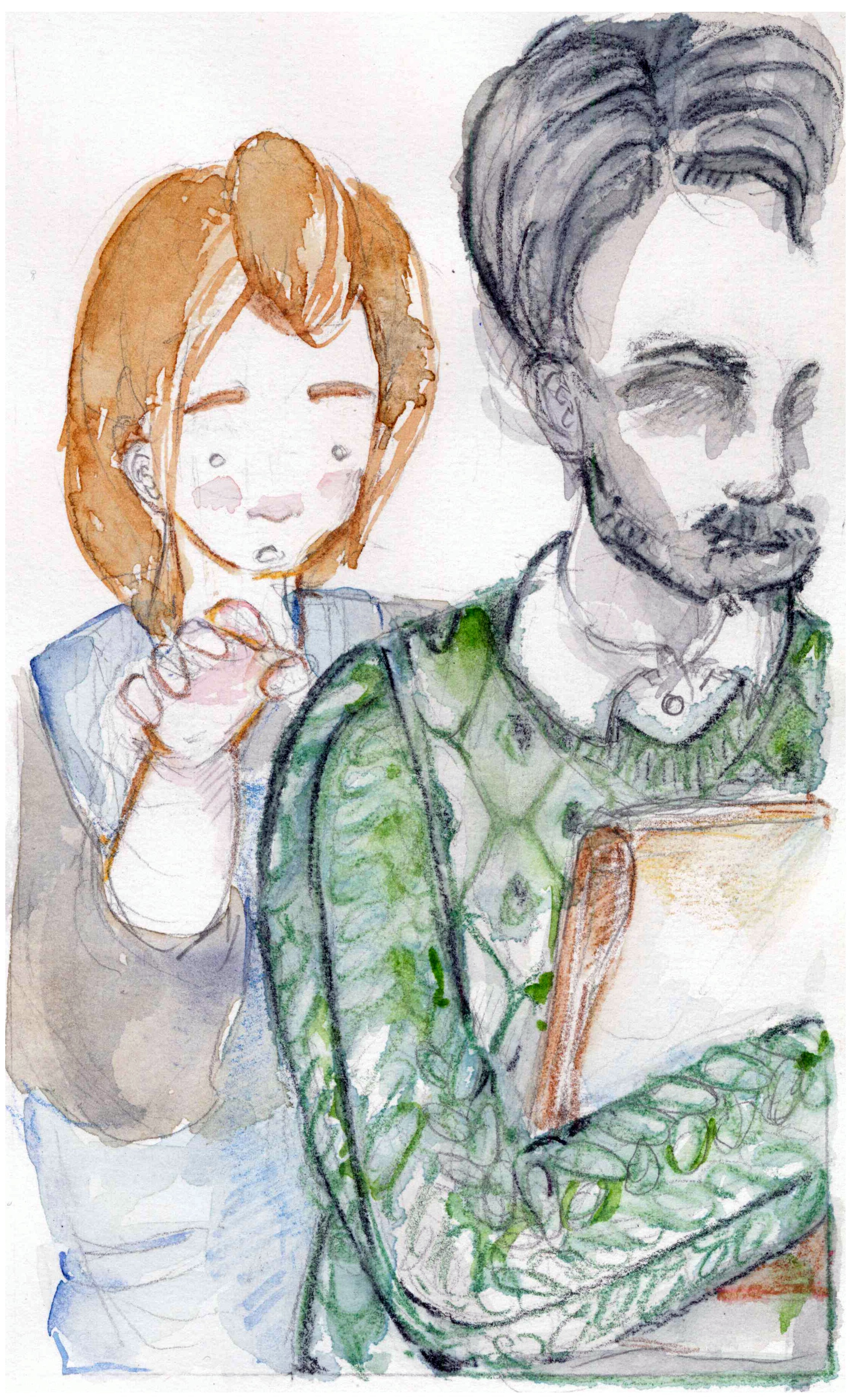
The illustrations accompanying this story were created by the delightful Daisy Mak, who lives on Instagram here.
An Atheist’s Favourite Parable: The Good Samaritan

It may seem strange to think that a faithless woman such as myself has a favourite story from arguably the most influential religious text in our society, but it’s true. I do.

Here’s the quick version, which you’ve probably heard before.

A man is travelling from Jerusalem to Jericho, when he’s attacked by a bunch of robbers. They stripped him, beat him, and left him to die by the side of the road.

As he’s lying there, a priest comes down the road. He sees the man, but ignores him and keeps walking.

Not long after, a Levite (a Jewish man who had a lot of status at the time due to heredity) came along. He too saw the gravely injured man, yet kept walking.

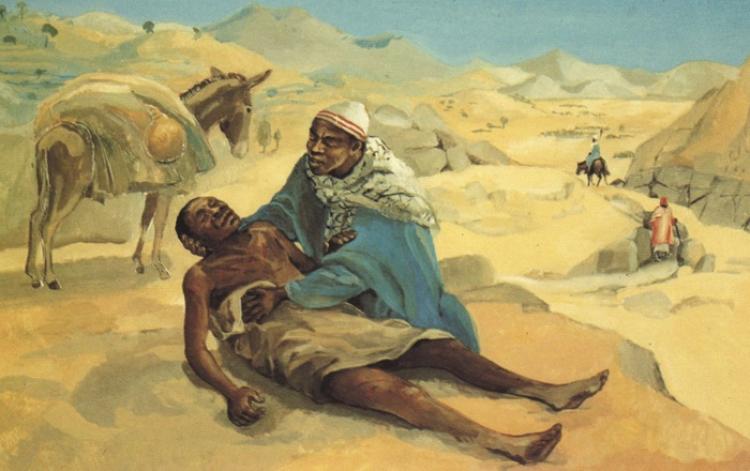
Finally, a Samaritan comes along, but unlike the others, he went to the injured man, bandaged and treated his wounds, before putting the man on his own donkey and bringing him to an inn, where he continued to take care of him. When he left the next day, he gave money to the innkeeper, telling him to look after the injured man, and that any extra costs the innkeeper incurred would be repaid upon the Samaritan’s return.

Now, Jesus tells this story to explain being “neighbourly”, and thus demonstrate the kinds of people who exemplify the way we should treat each other. Once he’s finished, he asks, “Now which of these three do you think seemed to be a neighbour to him who fell among the robbers?”

The response given is obvious: “He who showed mercy on him.”

“Well, duh,” you might well say. But to take the story at face value without understanding its context in the period causes us to lose its most potent meaning.

Let me retell it in a modern context. It’s a little bit longer, so bear with me. (I’ve also added a bit of extra editorial in white that you can read by highlighting the text. I couldn’t help myself.)

A man is walking through a dangerous part of the city at night, when he’s set upon by a gang of muggers. They steal everything he has, strip him, beat him, and leave him the gutter to die. He barely manages to crawl out onto a street where there is a bunch of foot traffic before passing out.

As he’s lying there, a preacher comes down the road. He sees the man, figures it’s all part of the Lord’s plan, and keeps walking.

Then comes a politician. He also sees the injured man. He figures he’s probably going to die, so no point burdening the health system by calling an ambulance. Plus, he doesn’t look like the kind of guy who’d vote for him anyway. He keeps walking too.

Then a rich man comes through in his limousine with tinted windows. He rolls down the window to see what that thing by the side of the road is, then once he’s clocked the injured man, he rolls his window back up and tells his chauffeur to keep driving. As they leave, he mumbles something about “druggies” taking “my tax money” through welfare.

Finally, a Muslim woman sees the injured man. She calls an ambulance and rides with him to the hospital. She waits in the hall to see if he’s going to make it. When he wakes up, she helps him lodge a police report and cancel his cards before she drives him home. Over the next few weeks, she continues to check on him, bringing him food to make sure he’s eating properly, until he’s fully healed.

And so the question remains the same: Who’s example is it that we should follow? Who is our true neighbour?

So, what’s the purpose of changing the identity of the characters, from the priest and the Levite, to the Samaritan?

It’s quite simple: those who walk past the injured man are always the people with the power in the society, often admired and glorified by many. In this world, that would be the rich capitalists, the politicians who make laws that favour the rich capitalists, and the religious right (especially those who can be found preaching the Prosperity Gospel, which is utter bosh).

More importantly, you could change the identity of the Samaritan character to any of a number of disadvantaged groups that are regularly discriminated against: a trans person, a person with a disability, someone in financial difficulty, an Aboriginal Australian… It’s sadly quite a long list, but the point is that it’s not the identity of the person that we should concern ourselves with but the actions.

And that’s why this isn’t just a “do the right thing” story, it has this question of identity that is at its core.

The name “Samaritan” doesn’t mean “a good person” in the way it does to many today. The Samaritans were, and still are, a specific religious and ethnic group within the Israelite races, and in the time of Jesus, the Samaritans and the main Jewish population hated each other. They destroyed and defiled each others temples, which is probably the most severe way I can think of telling someone you’re never going to be friends short of actually killing them. Even once the story is over, the man who asked the question that prompted the telling refuses to name the Samaritan as such, calling him only “he who showed mercy”. Pretty damn telling, that.

And yet, this story focuses not on the background of the Samaritan and whatever preconceptions Jesus’ audience may have had about them, but rather the actions of the individual, proving they matter more than whatever you might think about the person before they perform said actions. It’s this tendency to cling to ideas about what people are or should be rather than looking at evidence of what it is they actually do that is the fuel for racism, homophobia, transphobia, ableism and every other shitty way of thinking that pervades the way some members of our species think.

The other reason why this story is so important in our modern context is that those who walk past the injured man not only do so in the story, they walk past those in need in the real world every single day. The religious right put their desire to be a bigot before recognising the needs of the LGBTI+ community (and others outside their church) to be seen as human and to be treated with love and respect. The politicians treat the poor with disdain through programs like Robodebt, or refusing to raise the rate of payments that haven’t risen in real terms in over 25 years, and are well below the poverty line. The rich don’t pay their taxes and treat their workers (and the rest of us) like dirt.

I’m not a complete fool; I know there’s nothing we as individuals can do about the rich and the religious right. There is, however, one group that we do have influence over: politicians, especially given so many of them profess to be of the Christian faith.

The fact that this story is still so incredibly clear in the work of our political class clearly demonstrates that a significant number of folks who proclaim to be Christians, most notably the hierarchy, has a long way to go in earning their place in their own eternal life.

So if you see your local Christian-identifying MP at church, or if you feel the impulse to write a letter or give their office a call, ask them: what are they doing, not for the priest and the Levite, but for the Samaritans?

For it isn’t the way we treat our friends that demonstrates our morals and our worthiness.

It’s the way we treat everyone else.

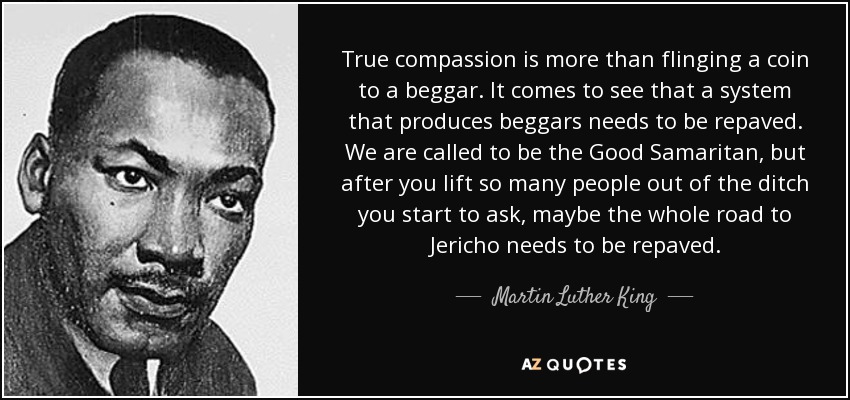
quote-true-compassion-is-more-than-flinging-a-coin-to-a-beggar-it-comes-to-see-that-a-system-martin-luther-king-87-72-21